

16TH INTERNATIONAL EXPERTS' CONFERENCE
ENVIROMANAGEMENT 2026
TO BURN OR NOT TO BURN
Can we recycle our way out of the problem?
OCTOBER 12 – 13, 2026
HOTEL PATRIA****
ŠTRBSKÉ PLESO, HIGH TATRAS, SLOVAKIA
LECTURER
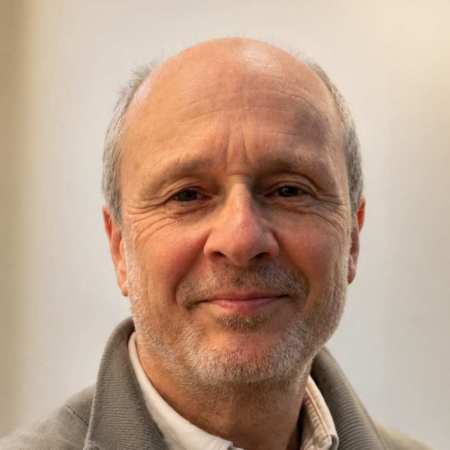
Dr. techn. Gerfried Cebrat
Owner
effiziente.st Energie- und Umweltconsulting e.U.
Graz
Austria
PRESENTATION
Ecological PV Harvesting on Existing Buildings:
An LCA Case for Wood-Glass-Silicon-Glass Window Shutters.
Ekologické využívanie fotovoltaiky na existujúcich budovách:
Prípadová štúdia LCA pre okenné žalúzie z dreva, skla, kremíka a skla.
KEY WORDS
Photovoltaic integration, LCA, end-of-life, wood-glass composite, recycling, WtE, building retrofit.
ANNOTATION
End-of-life is the weakest link in the circular economy claim of building-integrated photovoltaics (BIPV). Conventional aluminium-framed PV modules combine materials that are individually recyclable but, once laminated and bonded, are difficult to separate. Structural adhesive between frame and laminate, polymer back sheets or encapsulants, and the bonded interface between glass, cells, and busbars all reduce the achievable material recovery rate and increase the energy demand of recycling.
This presentation introduces a window shutter made of wood and featuring glass-glass PV modules and compares it against an aluminium-framed reference shutter using a Life Cycle Assessment with explicit focus on end-of-life routing. The functional unit is one shutter unit with PV of 100 Wp nameplate power, providing shading and electricity generation over a 25-year service life.. End-of-life scenarios are compared, landfill baseline, partial and full recycling of components and thermal recovery of combustibles combined with recycling of inerts.
The central claim is that a wood-and-glass construction improves the recyclability of building-integrated PV. The wood frame can be mechanically separated from the PV-panel without damaging the glass-silicon-glass core. The absence of a polymer back sheet on the rear side simplifies the recovery of silicon cells, silver busbars, and glass — separation steps that are normally the bottleneck of PV recycling. The wood fraction is routed to composting or Waste-to-Energy depending on the heating value of the aged material. This is precisely the synergy between recycling and WtE that the conference addresses: thermal recovery of the combustible fraction enables clean recycling of the inert and valuable fraction, rather than competing with it.
The aluminium framed PV baseline benefits from established recycling infrastructure, but typically uses a backsheet that prevents the same module-level disassembly.. A secondary aspect of the presentation addresses individual, ecological PV harvesting on existing buildings: shutters as a retrofit-capable, low-intervention surface that enables distributed solar generation without major facade modification — and that can be returned to the material cycle cleanly at end-of-life. Sensitivities discussed include wood treatment and preservatives, recycled aluminum content, transport distances, and service-life mismatch between wood frame, glass laminate, and silicon cells. The ability to adapt the orientation of the window shutter improves the value of the PV yield directing it into a time where it is needed. Also Electric Double-Layer Capacitor EDLC (supercapacitor) — for short-term storage to better match PV yield with demand will be investigated in this respect. So the LCA shall contain indirect effects including scope 1,2 and 3 emissions.
LECTURER'S PROFILE
Dr. techn. Gerfried Cebrat completed a degree in mechanical engineering and a post-graduate study in technological environmental protection, both at Graz University of Technology, Austria.
His academic work started with studies on district heating with waste-heat-driven heat pumps (1987/88) and solar desalination (1994/95); his doctoral thesis covered Monte-Carlo optimisation of tactical operation strategies for series hybrid-electric bus drivetrains.
After six years as a calculation engineer in the energy plant industry, he has been active in research for around twenty years, leading or contributing to more than two dozen national (FFG) and EU-level (ERA-Net, CETP) projects in energy, mobility, and environmental technology.
He has been a lecturer for measurement technology, mechanical engineering and modelling/simulation at FH Joanneum in Styria, and has acted as expert assessor for building energy, biomass combustion and solar-thermal. His technical work is based on a holistic, influence-analysis approach (Consideo Modeler) combined with creativity techniques such as TRIZ.
He has filed more than 100 patent applications, several of which directly relate to the present topic — including the SoWa project on integrating photovoltaics into roller-shutter slats with model-predictive control. Publications cover PV, solar-thermal, heat pumps, and radical innovation.
ORGANIZATION'S PROFILE
effiziente.st Energie- und Umweltconsulting e.U. (short: EUC, PIC 953199989) is a research-oriented, officially licensed technical engineering bureau for mechanical engineering, based in Graz, Austria. EUC is known for conducting and leading research projects at national (FFG-funded) and European level (ERA-Net, CETP) in the fields of energy efficiency in buildings and mobility, including IoT devices and energy monitoring. Particular competences include continuous and discrete modelling, model-predictive control, and holistic impact analysis covering society and environment. EUC has filed more than 100 patent applications.
EUC was founded in 1997 and reactivated in 2008 with a focus on innovative applications of photovoltaics and solar-thermal technology.
Recent projects include EPC4SES (ERA-Net RegSys, digital twins for the integration of buildings into smart energy systems), FinSESCo (ERA-Net MICall20, end-to-end digitalisation of energy systems and energy-performance contracting including crowd-investing), the currently running CETP project OPTIX (operation optimisation for Positive Energy Districts), and — directly relevant to the present submission — the SoWa project, in which photovoltaic integration into roller-shutter slats and the corresponding model-predictive control were developed and tested.
The bureau operates a small laboratory for experimental use of heat pumps and renewable energy, as well as an IoT and measurement-technology lab with networked embedded devices. The NPV-Balken project, the subject of this presentation, builds on the SoWa work and extends it to a wood-glass-silicon-glass shutter optimised for recyclability and circular-economy end-of-life routing.