

16TH INTERNATIONAL EXPERTS' CONFERENCE
ENVIROMANAGEMENT 2026
TO BURN OR NOT TO BURN
Can we recycle our way out of the problem?
OCTOBER 12 – 13, 2026
HOTEL PATRIA****
ŠTRBSKÉ PLESO, HIGH TATRAS, SLOVAKIA
LECTURER
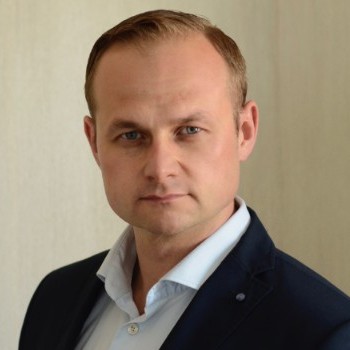
Jakub Bator
Country Manager Indaver Poland
Indaver nv
Beveren-Kruibeke-Zwijndrecht • Belgium
Deputy President, Poland
CEWEP e.V.
Brussels • Belgium

PRESENTATION
From Ash to Asset:
IBA (Incineration Bottom Ash) in the Circular Economy.
Od popola k cennému zdroju:
Škvara zo spaľovania v obehovom hospodárstve.
KEY WORDS
IBA, incineration bottom ash, dry extraction, wet extraction, metal recovery, circular economy, WtE, slag valorisation, secondary raw material.
ANNOTATION
Waste-to-Energy (WtE) facilities generate significant quantities of Incineration Bottom Ash (IBA) — typically 200–300 kg per tonne of processed waste. For decades, this residue has been seen primarily as a disposal problem. Today, properly managed IBA is increasingly recognised as a valuable secondary resource and a tangible proof point for WtE’s contribution to the circular economy.
IBA is not a homogeneous waste stream — it is a complex material containing recoverable metals and a mineral fraction with real market value. Ferrous metals account for 6–9% of IBA by weight, while non-ferrous metals — including aluminium, copper, and zinc — represent a further 1–2%. The remaining mineral fraction, when properly processed, meets quality standards for use as a substitute aggregate in road construction and civil engineering. In volumetric terms, a single mid-sized WtE plant can recover hundreds of tonnes of metals annually and generate thousands of tonnes of secondary aggregate — material that would otherwise be landfilled.
The extraction method matters significantly: dry bottom ash extraction, compared to the traditional wet process, yields higher recovery rates for fine non-ferrous metals and produces a mineral fraction with lower moisture content and improved quality. Both approaches are examined in the context of what they mean for actual recovery performance and downstream usability.
Yet the technical potential of IBA recovery runs ahead of its regulatory recognition. The classification of processed IBA as a secondary raw material — and its eligibility to count toward recycling targets — remains inconsistent across EU member states. End-of-waste status criteria vary, and in several Central and Eastern European markets, IBA processing is still treated as waste management rather than material recovery. This has direct consequences for investment decisions, permit structures, and the competitive position of WtE operators pursuing circular economy integration.
The presentation also introduces the concept of mobile IBA valorisation units — compact, deployable systems that bring processing capability directly to smaller WtE installations or regional collection points, lowering the barrier for circular economy participation among mid-scale operators and municipalities.
The presentation concludes with a strategic outlook: IBA recovery as a bridge between thermal treatment and material recycling — demonstrating that in an optimal waste management system, WtE and recycling are not alternatives, but partners.
LECTURER'S PROFILE
Jakub Bator is Country Manager Poland at Indaver Holding NV, one of Europe’s leading integrated waste management companies.
He has extensive experience in Waste-to-Energy policy at both national and European levels, with a particular focus on the role of thermal treatment within circular economy frameworks.
He is an active member of CEWEP (Confederation of European Waste-to-Energy Plants) and participates in European-level policy discussions on WtE, residue management, and energy recovery regulation.
ORGANIZATION'S PROFILE
Indaver Holding NV (Belgium) is a pan-European waste management group operating Waste-to-Energy, hazardous waste treatment, and recycling facilities across Belgium, the Netherlands, Germany, Ireland, Italy, and Poland. Indaver processes over 4 million tonnes of waste annually and is committed to the development of sustainable, circular waste management solutions. www.indaver.com
CEWEP (Confederation of European Waste-to-Energy Plants) is the European umbrella association representing operators of Waste-to-Energy facilities. Its members manage the majority of WtE capacity across Europe, processing residual waste that cannot be reused or recycled while recovering energy in the form of electricity and heat. CEWEP advocates for evidence-based waste and energy policy at the EU level and promotes the role of WtE as an integral part of the circular economy.